
ENLACE
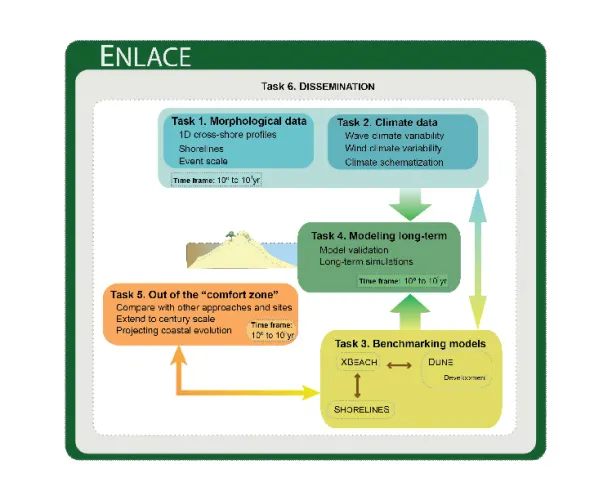
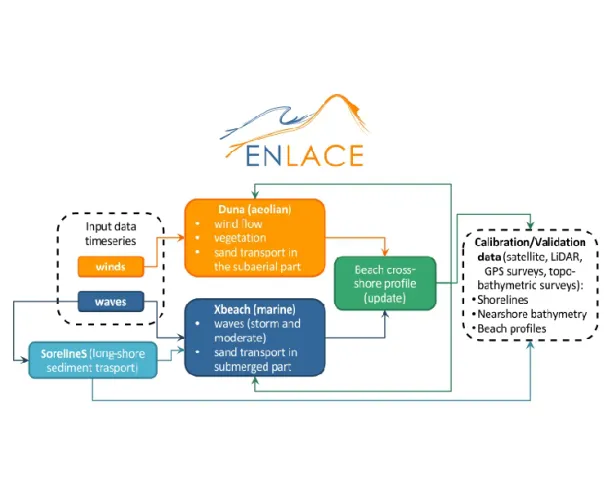
ENLACE will explore process-based models to identify the best strategy to simulate long-term coastal evolution of sandy coasts. That strategy will balance reductionism and synthesis to capture behaviors that provide the explanatory and predictive capabilities at an ‘appropriate complexity’ level. For that, a series of state of the art process-based models will be coupled to integrate both longshore (ShorelineS model) and cross-shore (XBeach-Duna coupled models) processes. The novel approach proposed within ENLACE will holistically explore long-term evolution of sandy coasts by also integrating aeolian processes and extending the cross-shore processes to the emerged coastal barrier. The results will contribute to predicting long-term coastal morphodynamics and guide policy makers and managers


Fundação para a Ciência e Tecnologia
About
Predictions of long-term coastal evolution on decadal timescales are increasingly sought for adaptation planning in light of climate change and sea-level rise. Present and future needs demand the extension of process-based models beyond short-term time scales to assessment of long-term coastal changes. These models are already able to provide detailed analysis and prediction of morphological changes at short-term time scales. Still, further investigation is needed to bridge the gap between short-term hydrodynamic and transport processes, varying over hours to days, and morphological changes, often taking place over much longer periods. Thus, the importance of studying the medium to long-term (years to decades) morphological change and its effect on coastal sustainability stresses the need for new methodologies to support predictions over these time scales.
Partners: Ceará State University: Davis Pereira de Paula | Francisco Rodrigo Cunha de Sousa; Ciencia Viva Center of Algarve: Emanuel Reis | Luis Gonçalves; Project Consultants: Dano Roelvink (IHE-Delft) | Irene Delgado (Edge Hill University) | Derek Jackson (Ulster University) | Theocharis Plomaritis (University of Cadiz)
Other team members / partners: Dano Roelvink (Scientific Advisor)
Results
Equipa
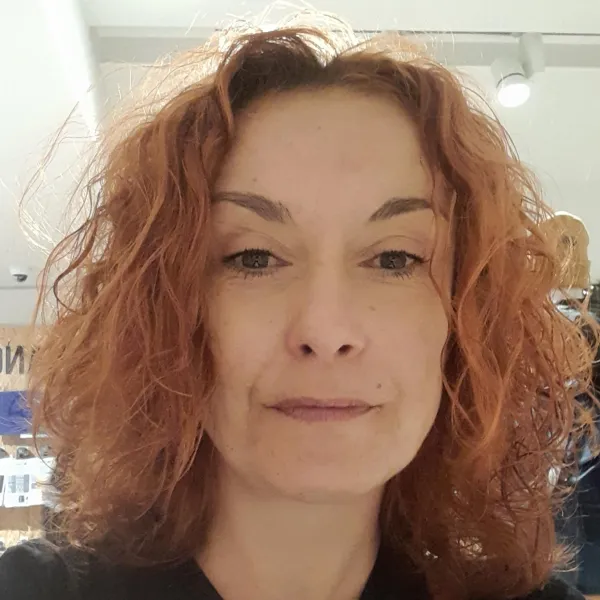
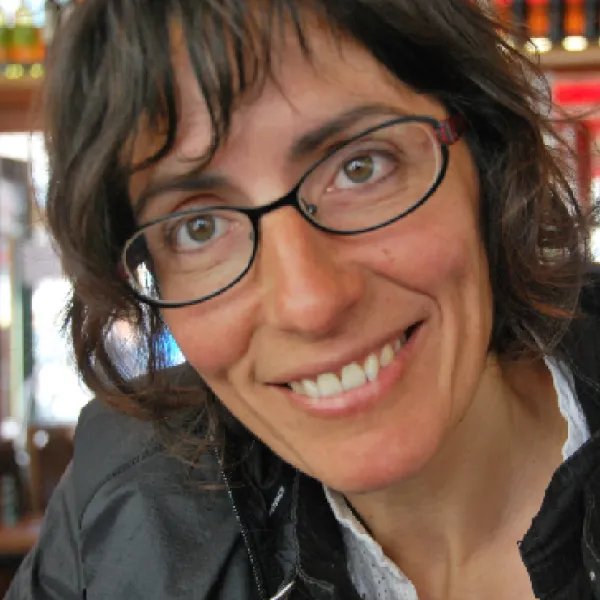
Other Members / Partners